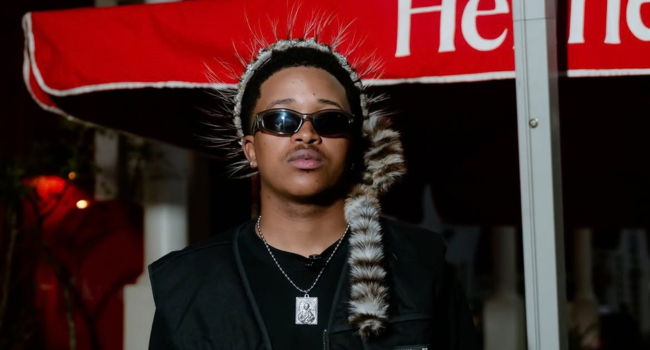
The post Kid X Breaks 5-Year Silence: Talks Riky Rick, AKA, Cash Time Drama, Fatherhood & New Single ‘iRoof’ appeared first on SA Hip Hop Mag.
In the story of South African hip-hop, few lyricists carry the weight, poise, and quiet mastery of Kid X. From dropping culture-shifting verses during the golden era of Cash Time Life and helping craft timeless anthems like Caracara, to navigating intricate label politics, industry feuds, and a transformative five-year hiatus, his journey is a masterclass in artistic resilience. Now fully independent, armed with new technical skills, and grounded by the responsibilities of fatherhood, the rap veteran sits down with The Cool for an unvarnished, deeply reflective conversation. In this wide-ranging interview, Kid X opens up about his relationship with late giants Riky Rick and AKA, the true story behind his iconic free mixtape, stepping into his identity as “X,” and his return to the forefront of the game with his latest single, iRoof.
The Cool: Yo, ladies and gentlemen, today we’ve got a really beautiful one. We’ve got one of my favourite rappers from my generation — a real lyricist who understands the game. We’ve got Kid X in the house. How you doing, brother?
Kid X: I’m well, brother. Feeling super, man. I’m honoured to be here
The Cool: Nice to have you. It’s been five years since your last project, Father of Zen. How are you feeling? What have you been up to, apart from being Zen’s father?
Kid X: That has taken up the bulk of what I’ve been doing. Outside of that, living life, taking care of the family, upskilling myself, and a lot of growing up.
The Cool: I bumped into the Amantombazana remix earlier this week. That’s a special record. For a lot of people it’s one of the most talked-about hip-hop songs. I’ve always argued that Kid X’s verse is the dopest on that record. How did you get on Amantombazana ?
Kid X: This was 13 years ago, so the memory might be a bit sketchy. Rest in peace to Riky Rick — he was the owner of the song. I just remember getting a call from Riky. He explained the concept. The original record was already out and making noise. He wanted to amplify it by putting a bunch of rappers on there, rapping back to back. He mentioned a few names he was looking at. Off that alone I knew I had to bring my A-game because of who else might be on it. We went into the studio one day and I knocked out my verse.
The Cool: Riky says on the remix, “Ngabiz’ X to show him there’s no beef.” Were you guys beefing at the time?
Kid X: Around that time I was closely linked to AKA’s Skimming Lames (2012), where I featured with Zingah over the Rick Ross “Stay Schemin’” beat. Kiernan (AKA) had friction with L’Tido at the time and said a few things on that record. By virtue of me and Zingah being on it, it looked like we were part of that camp. L’Tido put out a song with Riky doing ad-libs at the end talking his shit. Based off that exchange there was something in the air. From my side there was never anything beef-worthy. When Riky called, the energy was fine. I was relatively new and wanted to move from a sincere, clean place without engaging in things that didn’t have real foundation.
The Cool: When you landed at Cash Time you were almost in the AKA camp by optics. Did the AKA–Cassper beef affect your musical moves?
Kid X: It probably did by extension. Being in the camp paints you with the same brush. There could have been opportunities that never came because you were under that umbrella. But I don’t mean it in a regretful way. Things played out the way they needed to. Early on there was still some relationship with Cassper — I’m in the Gusheshe video cameoing. As time went on the relationship changed.
The Cool: When you reconcile your journey as Kid X, are you at a place of comfort with how your life has played out?
Kid X: Yeah. It’s been a turbulent journey, but I’ve found understanding in why it had to play out that way. There were a lot of lessons I needed to learn and a lot of growing that needed to happen. When you set your sights on a goal, the experiences you undergo are chiseling and shaping you for that goal. Oftentimes we get discouraged by the things that are meant to strengthen us.
The Cool: One of the moments that stands out is the mixtape. You strongly believed in it, the label wasn’t sure, and you left and dropped it as a mixtape. What does it take to believe in your art that strongly?
Kid X: What led up to that was a near-death encounter. I was on my way to a session with Psyfo, Busie and Speedstar for the song “Celebration.” I nearly got into an accident — a super close call. The next day I was driving on William Nicol reflecting, playing the demo of the mixtape, and I got a huge sense that there was no way I was sitting on this body of work. The label said it couldn’t go out, but I felt so strongly about it. More than that, the night before could have been my last, and this work would just be sitting on my hard drive. It really represented where I was at the time. People had never heard a full body of work from me prior to that.
The Cool: Was it a hard conversation to have with the label?
Kid X: I handed in the demo. They spent about a week with it and came back saying this is not it — maybe keep three or four songs and rework from there. I argued that if that’s how they felt, I was willing to dress it down, call it an EP or mixtape so they didn’t have to seem like they signed off on it. They eventually agreed. From a disappointment perspective I was able to deal with it in the conversation because of how strongly I felt about the body of work.
The Cool: What were the commercial implications of it no longer being an album?
Kid X: It meant we were probably giving it away for free and had to monetise differently. We uploaded it on DataFileHost for free. The numbers went crazy — half a million downloads later the label wanted to monetise because they were losing money.
The Cool: How do you interact with people who said “this is not it” when the thing then blows up? Are you able to stay humble?
Kid X: It’s a difficult conversation. From a relational perspective a lot of things become broken. It becomes clear that from a vision perspective we’re not aligned. There’s an issue of trust. Can we still actively pursue the same thing, or are we better moving separately? That became the reality. We had the conversation and had to look at whether the vision they had for me and the vision I had for myself as an artist were aligned. We were given freedom and autonomy to make the bodies of work and turn them in. That made it tough.
The Cool: Looking at Cash Time as a kind of marriage — if there’s misalignment in one area, does it reflect a lack of overall vision?
Kid X: In the Cash Time situation my position was that of a minority shareholder. I was inexperienced and being led for the greater vision. There was no ownership and I wasn’t in the driving seat.
The Cool: You then left for another setup. Looking back, what business lessons did you pick up?
Kid X: Again, alignment of vision. From the onset I was a minority even among the partners. The other three partners, from an interest perspective, were more Questor-focused. Going in I was very naive. I wanted a situation that put me at a different growth point — more responsibility, a platform to put on other artists. In the boardroom, as the minority shareholder where the other shareholders already had a common interest, you get strong-armed. A lot of the things you’d like to execute don’t necessarily see the light of day. It was a learning curve. The lessons learned, the music we made, the relationships we forged — we did some iconic things we wouldn’t have done any other way. Pros and cons. I’ll lean towards the pros.
The Cool: Which of the two setups elevated your career more? Cash Time branded you, but commercially?
Kid X: You can never really compare them. Cash Time was foundational. The foundation was laid rock solid. That’s why 15 years later we can still sit down and have this conversation. It was the introduction — that’s how people got to know me. Cash Time branded me as a rapper. They put me in front of people’s eyes and put the name in the South African hip-hop landscape. When people really got to experience me as more than a rapper — as a musician — that was Rap Life.
The Cool: You’ve always been seen as reserved, conservative, dope with the pen but not the guy shouting “I’m the shit.” How did that play out in business settings? Did it affect how your role was perceived?
Kid X: There was a level of not pursuing the crown. For the longest time in my career I wasn’t chasing the title of king or “the guy.” The journey was more about self-discovery — getting to the depth of who I am so the music would be a more honest and authentic reflection. A lot of my outlook is based on the fact that we need more people who want to serve the culture, serve the game, contribute, and look at what can be done better. That’s the attitude I came with. I believe in a different style of leadership — leaders who are ready to serve and do the dirty work. From a music standpoint I often look at the state of SA hip-hop, what’s missing, and how we can get there. I may plant a seed, but I may not be the guy to actively take it there. And honestly, I don’t think I was ready for the crown at any of those points. To wear a crown you need a lot of life experience and wisdom.
The Cool: Are you happy with the current state of SA hip-hop?
Kid X: I am happy, but the happiness is nuanced. Happy that it’s colourful. Happy that people are expressing themselves in their different shapes, forms, sizes and colours. It looks like the South African flag. From a music standpoint, when you listen to genres from South Africa you need to feel that. I think SA hip-hop is there right now — a bit of everything, a lot of young energy that’s hungry. But from an appeal perspective: do we appeal broadly, or strictly to the niche hip-hop-loving audience in SA? That’s a different conversation. There’s a lot of work that needs to be done to get us there.
The Cool: Music marketing looks different now. Back in the day you needed a dope joint and a couple of media runs. Now there’s content, TikTok pressure. How are you navigating that as an artist who existed before this pressure?
Kid X: It’s tough. It’s a necessary challenge. We need to look at them as tools of the day. In the past the tools were different. Now we need to partner up with some of the kids who have a better understanding of the tools. There needs to be a cross-pollination of knowledge. You as the OG can impart knowledge on how to better capture the South African audience; the kid can tell you how to better capture the digital audience. Marry the two and everything progresses. The perception you sell on the net supersedes the actual product. That’s the time we’re living in. As an older head that’s still a part of the game I’m adjusting to. It’s exciting to be put in a space where you feel you’ve mastered the music and then you’re back at square one learning again.
The Cool: Caracara was such a big song. How did that change your life?
Kid X: It did a complete 180. The turning point was a gig we did at Stones in Melville. We jumped on and did that song and our mics could have been off — no one would have cared because it was their song now. It had reached critical mass. From that point it became hysteria. People just wanted a piece of the song, and because you sing the song you come with it. Those were great times — travelling the country, spreading the song, and influencing how SA hip-hop looked and felt. It added colour and excitement. Bucket hats went crazy for those two years. In our personal lives it was a point of “wow, it’s actually happening.”
The Cool: Financially, at what point did you look at your career and say this is looking good?
Kid X: The metric for me has never been financial. My relationship with money is inte