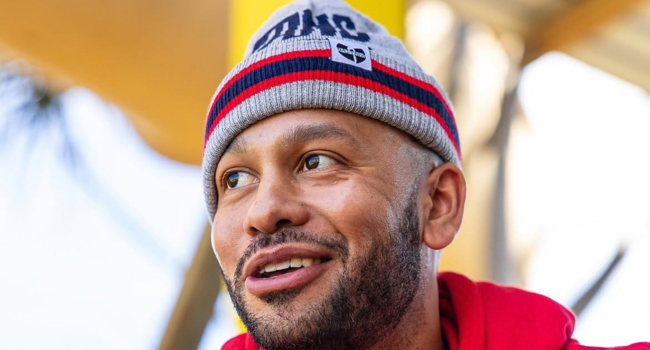
“Green Eyed Angel” is a song built around attraction, temptation, and the hard choices people sometimes make when they know something might not last. Set at a roadside bar outside Amarillo, the song introduces two people who share a real connection, even though the woman is honest from the start that she can’t promise forever. Rather than framing the relationship as simply right or wrong, the story explores the very human decision to take a chance, even knowing there could be consequences.
With its Texas Country roots, classic country feel, and modern production, “Green Eyed Angel” leans hard into storytelling. Its cinematic quality comes from vivid details of neon lights, back roads, pickups, and the wide-open atmosphere of the Texas Panhandle, while still leaving room for listeners to imagine the rest of the story for themselves.
In this interview, the songwriter talks about the inspiration behind “Green Eyed Angel,” why the Texas setting matters so much, working with producer Austin Biel, and how songwriting has become his way of making sense of life’s messier moments. He also looks back on his musical journey, his independent success, and the kind of legacy he hopes his songs will leave behind.
Listen to Green Eyed Angel
Follow Eric Osterhout on
Spotify
Bandcamp
“Green Eyed Angel” tells the story of an attraction that comes with a clear warning that it may not last. What inspired you to explore that kind of complicated relationship?
I’ve always been interested in writing about relationships that aren’t quite as simple as a traditional love song makes them out to be. Real people are complicated, and sometimes two people can have a very real connection even when they both know it probably isn’t going to last.
That was really the idea behind “Green Eyed Angel.” She isn’t misleading him. In fact, she’s probably more honest with him than a lot of people would be. She tells him right up front not to expect promises or forever. The complication is that knowing something and feeling something are two very different things.
I think those imperfect relationships make interesting songs because there isn’t necessarily a good guy or a bad guy. Sometimes it’s just two people meeting at a particular moment in their lives, knowing it may have an expiration date, and deciding the time they do have together might still be worth it.
The woman in the song is honest about not making any promises, yet the narrator chooses to move forward anyway. What do you want listeners to understand about his decision?
I think he understands the warning perfectly well. He just decides that knowing how something might end doesn’t necessarily mean you shouldn’t experience it.
There are times in life when your head is telling you one thing and your heart is telling you something completely different. He knows she isn’t promising forever, and he knows there’s a pretty good chance he could end up getting hurt. But there’s something about her, and about that moment, that makes him willing to take the chance anyway.
I don’t think the song is saying that’s necessarily the smart decision. It’s just a very human one. Sometimes we knowingly walk into things that may leave a mark because, at that particular moment in our lives, the possibility of what we might experience feels worth the risk.
There is a strong cinematic quality to “Green Eyed Angel,” almost as if the listener is watching the encounter unfold. How did you approach creating those vivid scenes through your songwriting?
I tend to see songs in my head almost like little movies. Once I have the basic idea, I start seeing the people, where they are, what’s around them, and how the story moves from one scene to the next. Then I try to build an arc that takes the listener through that story without having to explain every little detail.
With “Green Eyed Angel,” I wanted you to be able to picture the encounter as it happens. I think leaving some space for the listener’s imagination is important too. Give them enough detail to put them in the room, but don’t tell them what every chair looks like.
I also have to give a lot of credit to my producer, Austin Biel. I bring him the vision in my head and the pretty rough acoustic draft I play for him, then I explain what I’m seeing and what I want the song to feel like. One of the things Austin does incredibly well is take all of that and translate it into music. Sometimes I’m describing things in terms that probably only make sense to me, but somehow he gets it.
I think that partnership between the story, that rough acoustic starting point, and what Austin builds around it is a big reason “Green Eyed Angel” feels as cinematic as it does. The man’s a genius at that stuff.
How important was the Texas setting to the story and overall character of the song?
I don’t think I ever sat down and consciously decided, “I need to make this a Texas song.” Texas is just naturally the backdrop I see when I write. It’s where I live, it’s what I know, and it’s where most of the pictures in my head come from.
“Green Eyed Angel” starts outside Amarillo in a roadside bar off I-40, and that setting was important to me. There’s something about I-40 that has always stirred my imagination. It runs right through the Texas Panhandle and then just keeps going, through Oklahoma and Arkansas and eventually Tennessee. There’s a whole lot of country, stories and lives connected by that highway. For some reason that always gave me a little bit of a Turnpike Troubadours feeling, where real places and roads become part of the story rather than just scenery.
When I see stories like this, I see little bars, back roads, neon, pickups in the parking lot, and people whose lives aren’t particularly polished or perfect. Those things aren’t props I add afterward to make a song sound more country. They’re part of the world I know.
At the same time, I never want the Texas setting to limit the story. The place gives the song its character, but the emotions have to travel. Attraction, temptation, knowing better and doing it anyway, those things happen everywhere. If somebody in London or Italy can hear a song set outside Amarillo and recognize something from their own life in it, then I think the song has done what it’s supposed to do.
As a songwriter, you often draw inspiration from characters, places, working people, and real-life relationships. Was there a particular person, experience, or moment that helped shape “Green Eyed Angel”?
Like a lot of my songs, there isn’t necessarily one person you could point to and say, “That’s the Green Eyed Angel.” She’s more of a character built from pieces of people, experiences, observations, and probably a little imagination.
As I’ve gotten older, I’ve become much more of an observational writer. You meet people who have clearly lived some life. You can sometimes see it before they ever tell you their story. That was important with her. The “don’t-push-your-luck look” and those green eyes flashing “like Panhandle thunder” tell you pretty quickly that this woman has a history. Life has changed her, and she isn’t apologizing for who she is now.
What interested me wasn’t explaining everything that happened to her before she walked into that roadside bar. I actually like that we don’t know. I wanted to meet her at the same moment the narrator does and let the listener fill in some of those blanks for themselves.
Now, I will say my Bride is an Oklahoma girl, from Miami, and she has some pretty green eyes of her own. I’ve seen them flash a time or two. So maybe there’s a little inspiration closer to home than I’m willing to admit.
Musically, the song combines your Texas Country roots with a classic country feel and modern production. How did you balance those traditional and contemporary elements in the recording?
I don’t think Austin and I ever sit down and say, “Okay, this needs to be 60 percent traditional country and 40 percent modern.” I bring him the song, usually in a pretty rough acoustic form, we talk about what I’m hearing in my head, and then we start figuring out what serves the story.
I’m a big believer in real instruments and letting musicians actually play. That’s part of the country music I grew up loving, and I never want to lose that. But I also don’t believe traditional country storytelling means the production has to sound like it came out of another decade. You can respect where the music came from and still make a record that sounds alive right now.
With “Green Eyed Angel,” the story has this dusty roadside-bar quality to it, but there’s also tension, attraction and a little danger underneath everything. Austin did a great job of letting those classic country roots stay visible while building a bigger, more contemporary atmosphere around them. We weren’t trying to make something old or something modern. We were trying to make the song sound like the story felt.
“Green Eyed Angel” explores the idea of knowing something may end badly but choosing to experience it anyway. Has songwriting helped you make sense of similar moments in your own life?
Absolutely. I’ve said before that writing is my therapy. It’s one of the ways I make sense of life, although I probably understand that more now than I did when I was younger.
You live long enough and you realize some of the decisions that make the least sense on paper become part of the experiences that shape you the most. Relationships, chances you took, things you probably should have walked away from, and maybe a few things you wish you’d held onto a little longer. Sometimes you don’t really understand what something meant until years later.
That’s one of the gifts of getting older as a songwriter. At twenty, I probably would have written about what happened. Now I’m much more interested in why somebody did it, what it cost them, and what they carried away from it afterward.
Songwriting doesn’t necessarily give me all the answers, but it gives me a place to work through the questions. I can take something I’ve experienced, something I’ve observed, or even just an emotion I can’t quite put my finger on and turn it into a story. Sometimes by the time I’ve finished the song, I understand it a little better myself.
So yeah, writing is definitely therapy for me. I used to joke that it was cheaper than an expensive couch, but after production and marketing costs, I’m not so sure anymore. At least this way I occasionally get a pretty good song out of it.
You have built a growing catalog that moves between Texas dancehall, traditional country, Americana, rockabilly, and roots influences. Where do you feel “Green Eyed Angel” fits within your musical journey?
I think “Green Eyed Angel” is actually a pretty good example of where I am as a songwriter right now. I’ve stopped worrying very much about whether every song fits neatly into exactly the same musical box.
“Hot Fiddle Player” can take you into a Texas dancehall. “HANDful of Pills” has that rockabilly energy. “Done My 40” comes from a working-man, rootsier place. “Dive Bar Love Story” is much more reflective and character-driven. They sound different because the stories are different.
“Green Eyed Angel” sits somewhere in the middle of a lot of those influences. It has the storytelling and real-world setting that run through most of what I write, a strong Texas Country foundation, some classic country DNA, and then this darker, more cinematic atmosphere around it.
I think I’m becoming more comfortable letting the song tell me what it wants to be instead of deciding what genre it’s supposed to fit before I write it. The common thread isn’t necessarily the sound. It’s the storytelling. As long as the song still sounds like something I would say and tells a story I believe, I’m comfortable following it wherever it wants to go.
Your independent releases have received radio support in Texas, across the U.S., the UK, and Europe. How has that response influenced your c